Healing Services

CRANIOSACRAL THERAPY | ENERGY KINESIOLOGY | MASSAGE AND BODYWORK

Craniosacral Therapy

Craniosacral bodywork is a gentle, hands-on client centered manual therapy that focuses on the craniosacral system, which comprises the membranes and fluid surrounding the brain and spinal cord to access the central nervous system. It encorperates:

  • Gentle Touch: Light conscious pressure, typically no more than 5 grams, to assess and manipulate the Craniosacral system, promoting relaxation and healing. We use language and direction of energy to deepen awareness of existing patterns and suggest new possibilities of movement.

  • Mind-Body Connection: Addresses not only physical issues but also emotional and psychological imbalances, recognizing the interconnectedness of body and mind through body-centered learning.

  • Holistic Approach: The entire body and its systems, aiming to restore balance and enhance overall awareness through movement.

  • CranioSacral Therapy is a gentle, hands-on approach that focuses on releasing tension within bodies tissues, organs, and the central nervous system. Through light, non-invasive touch, the practitioner listens and responds to the body’s subtle rhythmic motions, supporting the reorganization and balance. By releasing restrictions we improve the flow of cerebrospinal fluid in the craniosacral system this therapy helps restore the body’s natural capacity for healing, self-regulation, and create the conditions for deep relaxation.

  • CranioSacral Therapy supports the body by working directly with the nervous system, helping to calm stress responses, ease pain and tension, and restore natural balance throughout the whole  body. It can assist with physical discomfort, emotional stress, trauma integration, sleep issues, and overall well-being by enhancing the body’s innate ability to self-correct and heal.

  • ​​A typical session lasts 45–60 minutes, and the number of sessions depends on your individual goals and needs. Some clients find relief after just a few sessions, while others benefit from ongoing work over time. In most cases, I recommend beginning with weekly or bi-weekly sessions to allow the body to adjust and integrate the changes.

    I approach this conversation collaboratively—together, we can develop a personalized plan of care that best supports your healing process. Setting clear and realistic expectations helps you understand that while lasting change may take time, each session builds upon the next, guiding your body toward deeper balance and resilience.


  • CranioSacral Therapy works on a very subtle and energetic level, supporting the body in releasing tension and reorganizing at its own pace. Each session unfolds according to what your body is ready to process at that moment. Sometimes profound change follows very gentle or seemingly minimal movement, and sometimes subtle shifts take time to integrate before you feel their effects.

    In the days following a session, your body may continue adjusting—this can include feeling lighter, more grounded, or occasionally more emotional as deeper layers of release occur. It’s important to be gentle with yourself, rest, and notice any small changes in how you feel.

    Many people are not initially attuned to the subtle sensations within their body, especially if the nervous system has been in a state of overactivity or stress. As you receive more sessions, your awareness often deepens, and your body learns how to settle into the parasympathetic (rest and repair) state, where deeper healing can unfold.


  • We do not treat anyone who has any conditions where a variation and/or slight increase in intracranial pressure would cause instability. These include Acute aneurysm, cerebral aneurysm, acute hemorrhage, herniated medulla oblongata, recent skull fracture, cerebrospinal fluid leak, spina bifida, chari malformation, or other pre-existing severe bleeding disorders.

  • Our bodies carry the imprint of our lived experiences. Emotions, stress, and unresolved experiences can be held beneath conscious awareness and expressed through patterns of tension, restriction, or discomfort in the body. Somatic Emotional Release works by gently identifying these areas of holding and supporting the nervous system in releasing them.

    Through mindful, body-centered techniques, this approach honors the deep relationship between physical sensation and emotional experience. Many physical conditions have an emotional component, just as emotional stress often has a physical expression. By addressing both aspects together, the body is given the opportunity to restore balance, resilience, and a greater sense of ease.

    This work does not force release, but creates a safe, supportive environment where the body can unwind at its own pace—allowing healing to emerge organically from within.

Energy Kinesiology

Energy kinesiology is a holistic therapeutic approach that combines principles of kinesiology, energy medicine, and muscle testing to promote physical, emotional, and mental well-being.

  • Muscle Testing: Assess the body's response to various stimuli to helps identify imbalances or blockages in energy flow (chi)

  • Holistic Approach: The interconnectedness of the body, mind, and spirit. It aims to address not just physical symptoms but also underlying emotional and energetic issues.

  • Energy Systems: Working directly with the energy systems based on ancient concepts from traditional Chinese medicine, including meridians to understand how energy flows through the body.

  • Balancing Techniques: Touch, visualization, and specific movements exercises to restore and promote self-healing by affecting energy systems or channels of energy of the body.

  • Touch for Health is a whole health model that is taught as a way to empower individuals to take responsibility for their life and well being. We isolate different muscles in the body which are related to specific Meridians. We use muscle testing to isolate them to find stress or imbalances within the energy pathway (meridian), related organ, and overall system. We balance posture, energy, and emotions to improve the function of the brain, muscles, immune system, and create the conditions for optimal performance. In this we also work together to release emotional stress, aches, pains, and any other discomfort.

  • One of the most fundamental principles of Touch for Health is the Self Responsibility Model. This creates a foundation for the teacher student, doctor patient dynamic model to dissolve and allows the space for the individual to be an active participant their own role in their own personal health and well-being. Creating the framework as an educational model or empowerment model provides people like you and I to to emphasize a proactive role in creating, maintaining, and improving our health through self awareness, self care, and making positive lifestyle choices.

    We create the environment to:

    Not diagnosis

    Become self awareness

    Build self care

    Active participation

    Empowerment

    Prevention

    The self responsibility model is a lens through health is a dynamic interplay of physical, mental, emotional, and energetic which allows each individual to take responsibility of their healing journey and achieve their most balanced state of health, wealth, and vitality.

Massage and Bodywork

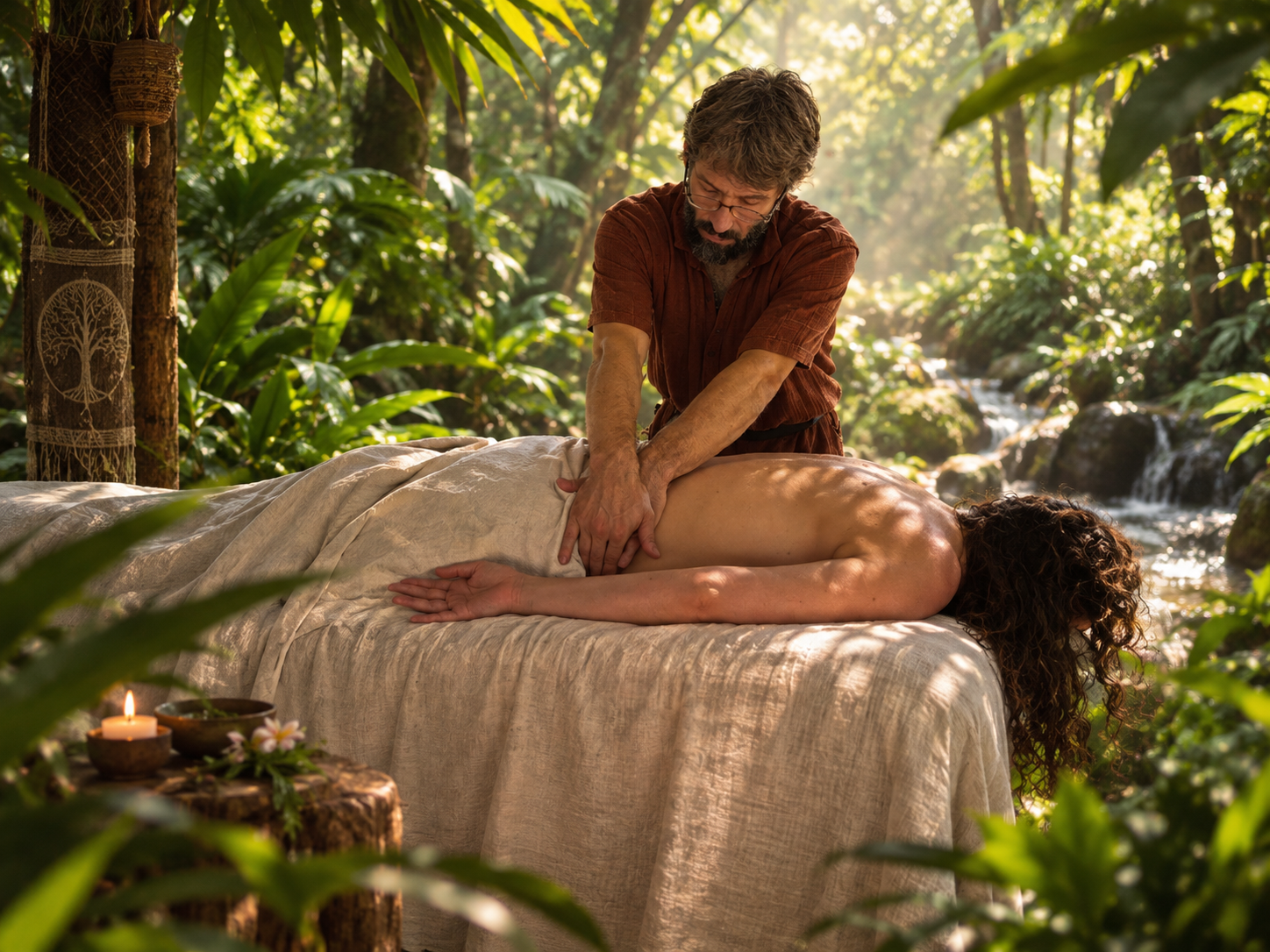
Massage and bodywork sessions incorporate different modalities from a grounded sense of safety and presence. I cultivate an environment for my clients to be able to feel into the spaces to let go in a way that soothes the nervous system and creates the condition for silence, conversation, through intuitive touch, kinesiology, and manual therapy.

Myofascial Release

The body is supported and connected by a continuous web of connective tissue called fascia. This system runs from head to toe, surrounding and influencing muscles, bones, nerves, ligaments, and organs. When fascia becomes restricted—often due to injury, stress, or repetitive patterns—it can create lines of tension that contribute to pain, limited movement, or physical dysfunction elsewhere in the body.

Myofascial Release works by gently engaging these restrictions through sustained, slow pressure. Rather than forcing change, this approach allows the fascia to soften and lengthen naturally, restoring mobility and improving communication between body systems. As tension is released, the body is better able to return to a state of balance, ease, and functional movement.

This method is especially supportive for chronic pain, postural imbalances, and conditions where tension feels deeply held or resistant to more forceful techniques.

Deep Tissue Massage

Deep tissue massage is a therapeutic, hands-on modality that works with the deeper layers of muscle and connective tissue. Through slow, intentional pressure, it increases circulation, releases chronic tension and adhesions, and supports the body’s natural capacity to heal.

This work is beneficial for overall health and rejuvenation, helping to maintain strength, flexibility, and suppleness in the muscles. Deep tissue massage can support pain relief, improve mobility, and invite a profound sense of relaxation and restoration for people of all activity levels and lifestyles.